
What Makes Reformer Pilates Training the Most Effective Low-Impact Workout Available Today?
Understanding the Mechanics Behind Reformer Pilates Equipment and Why It Transforms Your Fitness Results
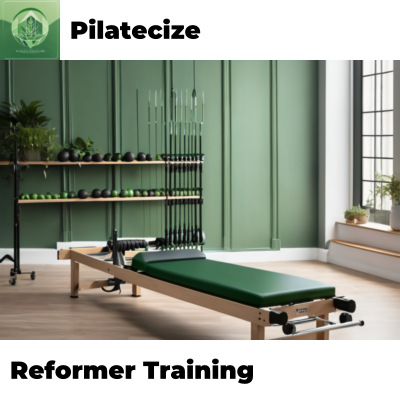
Reformer pilates represents a sophisticated approach to conditioning that fundamentally differs from traditional mat-based pilates. The equipment itself—featuring a carriage that slides along a frame, adjustable springs providing variable resistance, and straps for targeted engagement—creates an entirely different biomechanical environment. When you step onto a reformer, you're not just exercising; you're engaging with technology specifically engineered to support progressive resistance training while maintaining the grace and fluidity that pilates practitioners cherish.
The springs on a reformer machine operate as dynamic resistance elements. Unlike static weights, these springs provide accommodating resistance, meaning the force increases as you move away from the starting position. This variable resistance pattern triggers deeper muscle activation than traditional strength training alone. Your stabilizer muscles must work overtime, recruiting secondary and tertiary muscle groups that remain dormant during conventional gym workouts. The result? A more comprehensive neuromuscular adaptation that builds lean muscle while preserving joint health.
How Spring Resistance Creates Superior Muscle Engagement
The beauty of spring-based resistance lies in its gentle yet demanding nature. Springs don't jolt; they guide. As your muscles fatigue during a movement, the spring's resistance decreases slightly, allowing you to complete the final repetitions without complete failure. This creates what exercise scientists call "active insufficiency," where muscles receive continuous tension despite changing leverage angles throughout each movement. Your quadriceps, for instance, experience sustained activation throughout an entire leg press series because the spring tension never fully releases.
Physical therapists recognize reformer work as particularly valuable for rehabilitation scenarios. The equipment's ability to support body weight while providing proprioceptive feedback makes it ideal for returning athletes and individuals recovering from injury. The springs essentially become assistive devices that help you move through ranges of motion you might otherwise struggle to access safely.
The Carriage Mechanism and Core Activation Patterns
The reformer's sliding carriage introduces instability—controlled instability, but instability nonetheless. This forces your core stabilizers into constant micro-adjustments. Your transverse abdominis, the deepest abdominal layer, engages continuously to prevent unwanted carriage movement. Over consistent training, this builds the kind of functional core strength that translates to better posture, reduced back pain, and improved athletic performance.
Many practitioners come to reformer pilates specifically because their previous core training left them frustrated. Crunches and planks, while valuable, create repetitive stress on the spine. Reformer work distributes loading across multiple planes of motion, reducing cumulative strain on any single tissue. Your spine maintains neutral alignment throughout most movements while your core muscles work intensely without that grinding sensation typical of floor-based ab training.
The Scientific Evidence Supporting Reformer Pilates for Comprehensive Body Conditioning
Research published in peer-reviewed fitness and rehabilitation journals consistently demonstrates reformer pilates' effectiveness for several measurable outcomes:
- Lean muscle mass development - Studies comparing reformer pilates practitioners to sedentary controls show significant increases in lean body mass after 12 weeks of regular training
- Flexibility improvements - The equipment's supported stretching capabilities increase range of motion more effectively than static stretching alone
- Balance and proprioception enhancement - The unstable carriage surface forces proprioceptive adaptation, improving balance metrics in both young and aging populations
- Cardiovascular conditioning - High-intensity reformer sessions elevate heart rate into training zones comparable to moderate-intensity steady-state cardio
- Functional strength gains - Movement patterns developed on the reformer transfer directly to everyday activities and sports performance
The neurological adaptations occurring during reformer training extend beyond simple muscle contraction. Your nervous system learns to coordinate complex movement patterns with increasing efficiency. Each session teaches your body to recruit muscles in more sophisticated sequences. A chest press on the reformer involves not just your pectoral muscles but also your stabilizers—serratus anterior, rotator cuff, core muscles, and even your leg stabilizers working subtly to maintain carriage control.
Why Traditional Gym Equipment Falls Short Compared to Reformer Training
Conventional weight machines lock you into predetermined movement paths. While this provides safety for beginners, it prevents the neuromuscular adaptation that occurs during unstable, multi-planar movement. Your body adapts to what you demand of it. When you demand stability while moving against variable resistance, your nervous system responds by creating sophisticated motor control patterns.
Furthermore, traditional weights create jarring transitions between concentric and eccentric phases. The reformer's spring mechanics allow smoother transitions, reducing impact-related stress on joints. This explains why individuals with joint concerns often experience rapid pain reduction after beginning reformer training—not because the joints heal differently, but because the movement patterns demand less joint stress overall.
The Cellular-Level Adaptations Triggered by Reformer Resistance Training
When muscle fibers experience spring-based resistance, they undergo specific adaptations at the cellular level. The variable resistance pattern stimulates different muscle fiber types than constant resistance does. Type I fibers (slow-twitch, endurance-oriented) activate early in the range of motion. As the springs provide increasing resistance in later ranges, Type II fibers (fast-twitch, power-oriented) recruit progressively. This complete fiber spectrum activation drives comprehensive metabolic adaptations.
Mitochondrial density increases. These cellular powerhouses multiply in response to the training stimulus, enhancing your aerobic capacity and fatigue resistance. Your body literally becomes more efficient at producing energy. After twelve to sixteen weeks of consistent reformer training, practitioners report sustained energy improvements extending far beyond their workout sessions.
Evaluating Different Reformer Pilates Class Formats and Finding Your Optimal Training Structure
Small Group Classes: The Goldilocks Zone Between Personal Attention and Community Energy
Small group reformer classes—typically containing four to eight participants—provide unique advantages unavailable in either large group settings or one-on-one training. The instructor can observe each participant's movement quality while maintaining the motivational energy that group settings provide. You're not alone, yet you're not lost in a crowd of thirty people where the instructor barely notices your form breakdown.
Pilatecize offers small group reformer sessions where instructors provide individualized cuing without the premium pricing of private training. This format proves particularly valuable for people transitioning from general fitness into specialized pilates training. You receive sufficient attention to learn proper form while benefiting from the accountability that comes from exercising alongside others at similar fitness levels.
Progressive Programming Through Structured Class Sequences
Reformer training shouldn't jump randomly between different exercises and resistance levels. Strategic progression builds strength systematically. Early sessions establish neuromuscular patterns and build foundational strength. Intermediate phases introduce greater instability and higher resistance levels. Advanced training incorporates complex combinations where you manage multiple stability demands simultaneously.
The structured class formats at Pilatecize follow periodized programming principles, the same science that coaches use when training Olympic athletes. Your body adapts to current demands within three to four weeks. Without progression, adaptation plateaus. Your muscles stop changing. Your nervous system stops learning new patterns. Well-designed class sequences ensure you're always challenging yourself appropriately—never so easily that you stagnate, never so intensely that you sacrifice form and increase injury risk.
Private Training Sessions for Specialized Goals and Movement Limitations
Some situations demand one-on-one attention. Maybe you're recovering from specific injuries requiring modified movements. Perhaps you have asymmetrical strength imbalances requiring corrective work. You might be training for athletic performance in a particular sport where reformer exercises translate directly to sport-specific needs.
Private reformer training sessions with Pilatecize instructors offer customized programming addressing your unique circumstances. The trainer designs every exercise specifically for your body, your goals, and your current capabilities. They provide real-time feedback, adjust resistance mid-session based on your response, and modify any movement the moment they notice compensation patterns emerging.
Addressing Common Misconceptions About Reformer Pilates and Revealing What Actually Happens During Your Training
The "Pilates Won't Build Real Muscle" Myth Thoroughly Debunked
This persistent misconception likely stems from pilates' historical association with flexibility and posture work. While traditional mat pilates certainly emphasizes these qualities, reformer pilates operates in an entirely different category. The variable spring resistance, combined with the demanding stability requirements of the moving carriage, creates sufficient mechanical tension to trigger hypertrophy—the technical term for muscle growth.
Mechanical tension represents one of three primary mechanisms driving muscle growth. When your muscles experience sustained force production against significant resistance, they adapt by increasing contractile protein density. Your muscle fibers literally become thicker. Progressive overload on a reformer—increasing spring resistance, reducing stability assists, or adding more repetitions—produces the same fundamental adaptation as lifting heavy dumbbells. The difference lies in execution quality and joint safety, not in the physiological response.
Consider the leg press on a reformer with maximum spring resistance. Your quadriceps, hamstrings, and glutes work intensely against substantial force. Your stabilizer muscles contract to prevent carriage drift. The combination generates sufficient metabolic stress to create meaningful strength adaptations. Add proper nutrition and adequate recovery, and muscle growth follows inevitably. Many individuals discover they've developed visible muscle definition after consistent reformer training, surprising themselves with unexpected strength gains.
Debunking the "Reformer Pilates Is Only for Flexibility and Recovery" Framework
While reformer training absolutely improves flexibility—the supported stretching positions allow deeper range of motion work than floor stretching—positioning it solely as a flexibility tool drastically undersells its capabilities. This misconception likely developed because many people encounter reformer pilates through recovery contexts. Physical therapists recommend it. Yoga instructors suggest it. Athletes use it for active recovery between intense strength sessions.
These applications are valid, but they represent only one dimension of reformer training's potential. A challenging reformer class elevates your heart rate into cardiovascular training zones. Your muscles experience substantial fatigue. You exit the session feeling genuinely worked, not gently stretched. The equipment accommodates both gentle, restorative sessions and intensely demanding workouts. Pilatecize instructors design classes across this entire spectrum, matching intensity levels to class descriptions and participant goals.
Understanding Why Reformer Pilates Feels Different from Traditional Strength Training
The sensation of reformer training differs noticeably from conventional weightlifting. You experience continuous muscle tension rather than discrete contractions followed by rest phases. The springs never fully release; they always maintain some tension. This creates an exhaustion pattern different from what heavy deadlifts or squats produce. Your muscles feel thoroughly fatigued in a way that feels almost pleasant rather than painful—a sophisticated muscular fatigue rather than joint-stressed strain.
This distinction matters for adherence and sustainability. Many individuals who struggle to maintain traditional gym routines find themselves genuinely excited about reformer classes. The movement patterns feel elegant. The results feel functional rather than purely aesthetic. Over time, this psychological difference translates to greater consistency, which ultimately determines long-term success. Consistency beats perfection in fitness training. A challenging reformer session completed twice weekly for years produces superior results to sporadic intense gym sessions undertaken inconsistently.
The Specific Benefits Reformer Pilates Delivers That Other Training Methods Cannot Match
Spinal Health and Postural Integrity Through Supported Alignment Patterns
Your spine contains twenty-four vertebrae stacked like delicate blocks. Each vertebra depends on surrounding muscles to maintain proper positioning and control forces passing through the spine. Poor postural habits—sitting hunched at desks, slouching while looking at phones, compensating around pain—create muscular imbalances. Certain muscles tighten while others weaken. The spine's neutral alignment gradually shifts.
Reformer pilates reverses this process. Nearly every exercise emphasizes maintaining neutral spine positioning while your limbs move against resistance. Your deepest core muscles learn to stabilize your spine during challenging movements. Your postural muscles gradually strengthen. Your nervous system develops superior body awareness. After consistent training, many practitioners notice themselves naturally sitting straighter, standing taller, moving with greater grace. Clothing fits differently. Friends comment on changed posture. More importantly, chronic back pain that plagued you for years often diminishes dramatically.
Physical therapists recognize reformer training as perhaps the most effective postural correction tool available because it combines three crucial elements: spinal support through the equipment, proprioceptive feedback from unstable surfaces, and progressive strengthening of deep stabilizer muscles. You're not just told to "strengthen your core." Instead, you engage in specific movement patterns that inherently strengthen core muscles through functional demands.
Joint-Friendly Strength Development Without Impact-Related Degeneration
Traditional strength training often involves impact. Barbell squats stress knee joints. Heavy deadlifts load the lumbar spine dramatically. Plyometric training pounds joints repeatedly. These training methods produce excellent strength results, but they accumulate joint stress over years and decades.
Reformer pilates eliminates impact entirely. The carriage glides smoothly. Springs provide graduated resistance rather than jarring transitions. Your joints experience loading without pounding. This allows strength development without cumulative joint stress, a distinction that becomes increasingly important as you age. A sixty-year-old with decades of reformer training typically maintains better joint health than a sixty-year-old with decades of heavy lifting.
This quality makes reformer training particularly valuable for individuals managing arthritis, previous injuries, or general joint concerns. You develop genuine strength—not rehabilitation-level gentle movement, but real strength gains—while preserving joint integrity. Some of Pilatecize's most dedicated clients come from this population: individuals who love training but need approaches that don't exacerbate joint problems.
Metabolic Efficiency and Body Composition Changes Without Restrictive Dieting
Reformer training's intensity level, when executed properly, generates substantial metabolic demand. Your body burns significant calories during each session. More importantly, the training stimulus triggers metabolic adaptations extending far beyond the workout itself. Your resting metabolic rate increases slightly. Your muscle mass increases, and muscle tissue demands metabolic resources simply existing. The combination produces gradual body composition improvements—more muscle, less fat—without extreme dietary measures.
Many people discover they lose fat while actually eating more food when they begin consistent reformer training. The mechanism involves multiple factors: increased calorie burn during training, elevated post-exercise oxygen consumption lasting hours after workouts, and metabolic rate increases accompanying increased muscle mass. Unlike restrictive diets that eventually prove unsustainable, these changes result from training-induced adaptations that feel natural and permanent. You're not fighting biology; you're leveraging it.
Psychological Benefits and Mental Health Improvements Accompanying Physical Training
The mind-body connection that pilates emphasizes—sometimes dismissed in traditional strength training cultures—represents genuine neuroscience. During reformer training, you must concentrate intensely on movement quality. Your attention narrows to present-moment awareness. This meditative quality activates your parasympathetic nervous system, the relaxation-response system that opposes chronic stress activation.
Regular reformer practitioners consistently report reduced anxiety, improved mood, and enhanced emotional resilience. These aren't placebo effects; they're documented neuroscientific outcomes of consistent exercise training. Your brain releases endorphins and other neurochemicals that improve mood. The accomplishment of completing challenging workouts builds confidence. You develop a stronger sense of bodily competence and control. These psychological benefits often prove as valuable as physical improvements, particularly for individuals dealing with stress-related conditions or emotional challenges.
Identifying Your Starting Point: Assessing Readiness and Establishing Realistic Expectations
Determining Your Current Fitness Level and Appropriate Starting Class Intensity
Beginning reformer training requires honest self-assessment. You're not competing against anyone but yourself. Your starting point—whether you're a complete beginner, transitioning from another fitness modality, or returning after time away—determines your optimal entry class and initial progression pace.
Beginners should seek beginner-focused classes explicitly designed to teach proper form before increasing intensity. These classes feature:
- Detailed explanation of each exercise's purpose and proper execution
- Frequent instructor feedback and form correction
- Lower spring resistance selections
- Fewer repetitions allowing quality over quantity
- Integration of fundamental movement patterns before combinations
Individuals with prior fitness backgrounds from yoga, traditional pilates, or general strength training possess foundational body awareness that accelerates adaptation. You'll likely progress to intermediate classes faster than complete beginners. However, resist the temptation to progress too quickly—reformer-specific movement patterns require time to master regardless of prior experience.
Understanding the Typical Timeline for Noticeable Physical Changes
Realistic expectations prevent disappointment and maintain motivation during initial training phases. Physical adaptations occur gradually:
- Weeks one to three: Neuromuscular adaptation, movement pattern learning, establishing consistency. You might feel sore initially as muscles adjust to novel demands. Mental benefits emerge quickly—improved mood, better sleep, reduced stress after just a few sessions.
- **Weeks